
Rand’s Unpublished Fiction
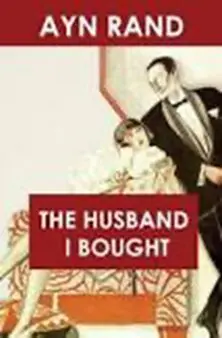
The Husband I Bought (1926)
Good Copy (1927)
Escort (1929)
Her Second Career (1929)
The Simplest Thing in the World (1940)


Background
Description
Ayn Rand’s The Husband I Bought is a short story that follows a young woman, Irene Wilmer, who uses her inheritance to pay off her fiancé, Henry Stafford’s, debts. In the story, Irene buys her husband’s freedom from debt slavery by giving him her inheritance. Since, despite his financial difficulties, Irene loves her husband, even going so far as to devote her romantic love life for him. For “four short years” they are happy. Until Irene’s friend, Claire, stays with them. Afterwhich Irene tragically sacrifices her values, interests, and life, so her husband is happy with another woman.
Evidently, Irene loves her husband so much she wants to see that he is happy, even if it is with another woman. For Irene’s love for her husband is tested by a romantic rival. A woman (and friend of Irene) Claire Van Dahlen, who had recently come to town. Ultimately, Irene leaves this toxic relationship, so her husband can be fully happy with another woman
Thus, this story is about surviving loveless marriages by leaving partners who are not right for you. Especially, if they are abusive and controlling.
Theme
The main theme of the story is the futility of turning over your life and heart to another person to make them happy at the expense of your own romantic interests. Since, the story suggests that “sacrificing one’s own interests for another, even out of love, can lead to personal suffering.” (Google Gemini, AI).
That said, Peikoff writes, in “The Husband I Bought’s” preface that because the story conveys “a woman’s feeling for [a] hero – [for an] ideal man,” – Irene is not merely “a selfless wife” who extinguishes herself for an unrequited love. Rather, she is “a passionate valuer, [since] her decision to leave Henry is not self-sacrifice, but self-preservation; the reaffirmation of her values. She cannot accept anyone less than Henry, or any relationship with him less than what she had.” Peikoff continues, that “Irene does not draw a tragic conclusion from her suffering. The glory of her life, she feels, is that Henry exists, that she had him once, and that she will love him always. For even in the agony of unrequited love, her implicit focus is on values, not pain. This is why Irene protects her ideal Henry from suffering, to protect him for her own sake, although she is leaving him, to keep her supreme value whole, radiant, godlike, not dimmed or diminished by loss and sorrow.” For Irene’s story, writes Peikoff, “records a kind of farewell on the [husband] that [Irene] loved and had now lost forever.” (Peikoff, The Early Ayn Rand, 5).
As a way of processing Rand’s own feelings for men she loved but lost. Men, like Lev Bekkerman, the first man Rand ever loved, who, like this story’s heroine, also marries a mediocre partner.
Good Copy (1927)
Published, in 1927, one year after “The Husband I Bought,” “Good Copy” is lighter, earlier work about “a lighthearted conflict between an 18-year-old heiress, Jinx, and a small-town newspaper reporter, Laury McGee, who tries to stage a high-profile kidnapping to get a sensational story. The story is about how Jinx, far from being scared, decides to play along with the “kidnapping” to the point where the reporter doesn’t know who is in control of the situation.” (Google Gemini, AI).
“Good Copy” is an early, casual, example of Rand’s talent for storytelling, before she fully developed her more serious Objectivist philosophy. Accordingly, the story has been criticized for its “unseriousness,” together with the fact that “it doesn’t deal with big issues,” like Rand’s novels because “it has no profound passions, no immortal struggles, no philosophic meaning.” (Peikoff, Editor’s Preface of The Early Ayn Rand, 33).
Rand’s response, to this criticism, was that the story presents man’s life not as a series of tragic disasters that characters need to avoid, but rather that in this story characters are mostly light-hearted and cheerful. As they revel in a world where all of civilizations big social problems have already been resolved. Opting, instead, to focus on their own goals, purposes, and desires, in a world were achievement is more than possible; it is likely. Basically, Rand suggests that “Good Copy” is “a pure adventure story without any deep philosophical theme,” written to express her optimistic, benevolent, life-sensations (Early Ayn Rand, 35).
Escort (1929)
This unpublished short story, which is approximately 4, 500 words long, is included in The Early Ayn Rand. In a collection of Rand’s early, unseen, works.
In Escort, a recent college graduate named Larry Dean secretly works in a New York City nightclub as a male escort, carefully hiding his occupation from his wife, who thinks his night job requires him to go to a warehouse where he works as a shipping clerk. However, unbeknownst to his wife, Sue, Larry’s real job is to work for the Claire Van Nuys Escort Bureau. In this job, “each evening, night after night, [Larry] has to accompany fat dowagers, rich spinsters, and foolish, giggling out-of-town matrons on an endless round of dinners, suppers, dances, & nightclubs.” Basically, Larry works this job to raise enough money to pay their rent. Since, this young couple cannot afford to pay their rent some months. Leaving Larry’s wife each night to fret about rent money. But he does so in secret. For Larry would rather die than let his wife guess the kind of job he has. Since, he thinks it lowly, humiliating, and beneath him, to work as a male escort.
Sue, for her part, is lonely, at nights, especially after Larry refuses to take her out at night. In fact, Larry is angry with his wife for even suggesting they go to a nightclub. Left with no choice but to go out on her own, sue saves $100 to this end, by budgeting her household allowance. Then, she wears a “blue, shimmering, evening gown,” that she had not donned in over two years, so she can dance, laugh, and sing, at “one of those brilliant nightclubs,” she had always heard about and longed to see.
Ironically, the story ends with Larry Dean being assigned by this escort agency to pick-up and entertain his wife; Sue Dean.
Given, that this short story was written in 1929, when “Rand had been working [a hated job] in the office of the RKO wardrobe department,” it is appropriate that this tale focuses on gaining spiritual release from a loathed job (Peikoff, Editor’s Preface Early Ayn Rand, 75). By enjoying oneself at a night club. Even donning a glittering evening gown, to celebrate the occasion. For Rand was sick-and-tired of her monotonous work life; just as she was fed-up with her inability to pay for a good time out on the town. So, she wrote a story about a married woman who wants to go to a nightclub to listen to jazz music, drink champagne, and eat a fine meal.
Given Rand’s recent marriage to Frank O’Connor, as well as her recent escape from Soviet Russia, it is especially appropriate that her early writing focuses on conjugal relations, between husband-and-wife, as well as the longing to go out in order to enjoy physical, spiritual, and material pleasures. Since, Rand was starved for material goods, spiritual sustenance, and the ability to dress elegantly, in her native Russia. For Rand discovered that such light-hearted, non-serious, entertainment, was nearly impossible for most citizens in the Soviet Union.
Like, in The Husband I Bought, Rand also uses a pseudonym, O.O. Lyons, to sign this story. Since, O.O. Lyons, as Peikoff explains, refers to a pair of “small, stuffed lion cubs, christened Oscar and Oswald,” which Rand trotted-out every Christmas, as a “private symbol” between her and her husband, Frank O’Connor, representing the “benevolent universe premise.”
Her Second Career (1929)
Ayn Rand’s short story Her Second Career is “about a famous Hollywood actress who loses her fame due to nepotism and then tries to succeed a second time through her own merit by starting over under a new name in Europe. The story satirizes the superficiality of Hollywood and the machinery that creates celebrity, showing a star forced to confront the unearned nature of her initial success.”
- Protagonist: Claire Nash, a movie star whose fame is a result of her producer's efforts, not her talent.
- Plot: A wealthy and powerful producer offers her a wager: he will write her next screenplay only if she attempts a "second career" in Europe to prove she can succeed on her own merit.
- Themes: The story critiques the film industry's culture of celebrity, showing how fame can be manufactured rather than earned. It also serves as a precursor to the themes in Rand's later novel The Fountainhead, particularly the character of Peter Keating, who embodies the unearned success that Nash must confront.
- Rand's connection: The story was written in 1929, after Rand had started working in Hollywood for RKO's wardrobe department, and it shows her developing a sharp, critical wit that would become her hallmark
(Google Gemini, AI)
In sum, Her Second Career, according to Leonard Peikoff, is about “the importance of values in human life. But here the focus, according to Peikoff, is on the negative, on those who do not live life but merely posture at it, those who do something other than pursue values.”
The Simplest Thing in the World (1940)

- The premise:The story is about a writer named Henry Dorn who needs to earn money by writing a simple, shallow story that he believes the public wants to read.
- The conflict:He consciously tries to write a story with "lousy bromides" and "petty" characters, but his subconscious, directed by his fundamental values, keeps changing the plot.
- The outcome:His "sense of life" thwarts his attempts to create the simplistic story. Instead, he ends up writing a story about a heroic figure, which reflects his true creative nature.
- The purpose:Rand wrote this story to illustrate how an artist's deepest values, or "sense of life," are the ultimate source of their creative work and cannot be overridden by a conscious, rational decision to do something else.
(Google Gemini, AI)